

In 2024, the Natural Science Collections Facility (NSCF) imaging team visited the University of Zululand (UNIZULU) Herbarium to image specimens as part of its broader Herbarium Specimen Imaging Project and realised that the collection was in urgent need of intervention. With changes in staff at UNIZULU and limited resources for the upkeep, the herbarium had become vulnerable to insect infestations. The hot and humid Zululand climate further complicated proper maintenance.
To safeguard this valuable resource, more than 8,000 specimens were relocated to the Bews Herbarium at the University of KwaZulu-Natal (UKZN) under a 99-year loan agreement. This move ensures that the collection will now benefit from the care of a larger, better-resourced team and form part of a much bigger herbarium with robust infrastructure. The NSCF initiated discussions between the two herbaria and allocated funding to the Bews Herbarium to support the relocation, incorporation and curation of the collection.
Why This Move Matters
The relocation means that the UNIZULU specimens are now fully integrated into the Bews Herbarium’s processes. They will be available for loan through the Bews Herbarium system, accessible to researchers visiting the facility and managed under the same imaging and data protocols as the rest of the collection. Additionally, previously unaccessioned material from UNIZULU will now be formally catalogued, improving its accessibility and long-term preservation.
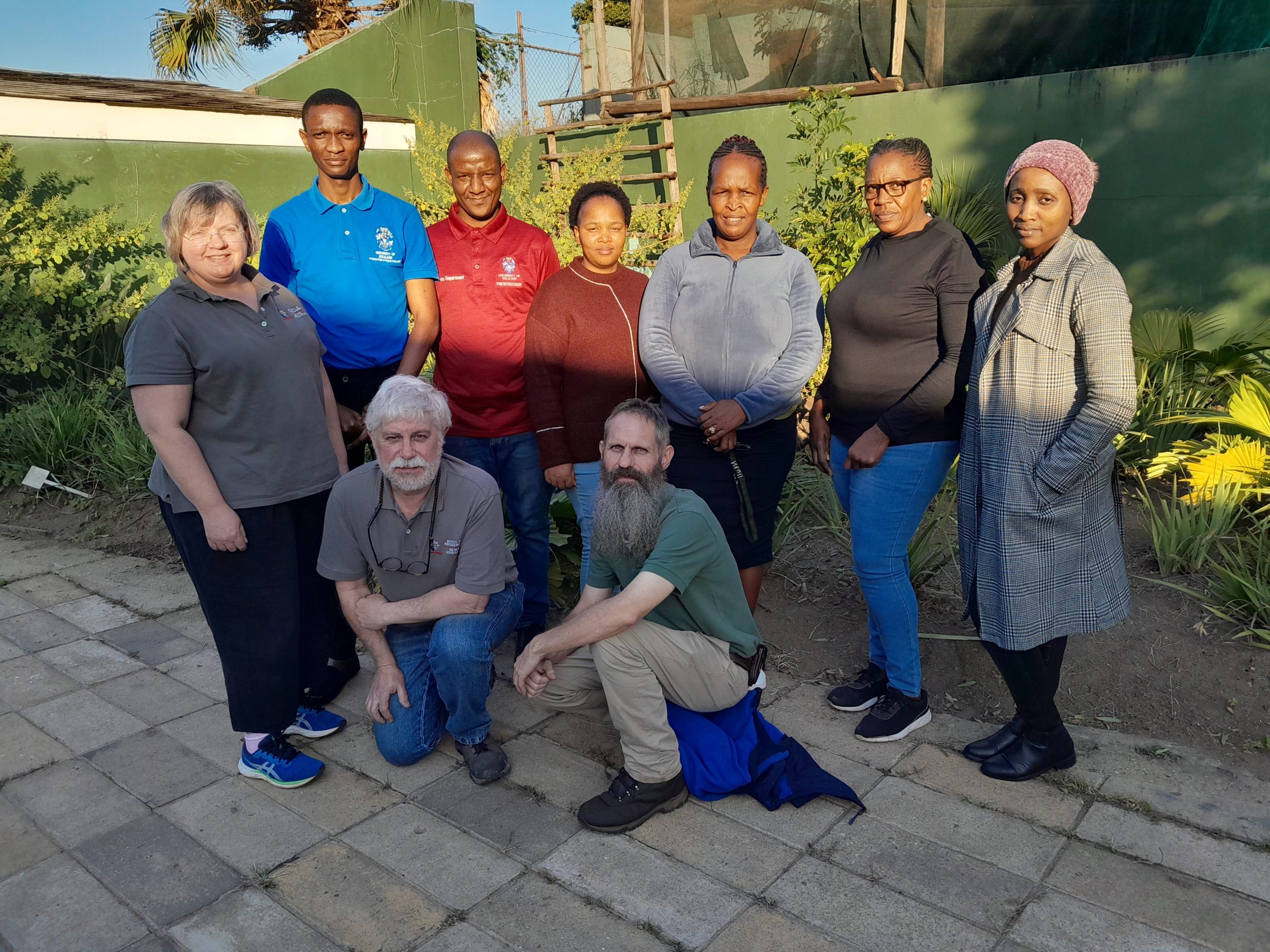
The joint team from UNIZULU and Bews Herbariums
Planning and Execution of the move
The process began with a memorandum of agreement between UKZN and UNIZULU, finalising the 99-year loan arrangement, and an agreement between the NSCF and the Bews Herbarium for funding and support to facilitate the relocation and care of the collection. Ahead of the move, UNIZULU staff fumigated the collection to halt insect damage.
With agreements in place, Bews Herbarium staff sourced packing materials and prepared to transport the specimens. On 7 July, three UKZN staff members, Prof. Benny Bytebier, Dr. Christina Potgieter, and Ms. Prudence Magwaza, travelled to UNIZULU with two vehicles. Assisted by UNIZULU technical staff, the team began packing immediately. Specimens were carefully sandwiched between cardboard, tied with string, sealed in plastic bags, and labelled before being packed into boxes.
By the next afternoon, about 90 boxes were packed and transported to the Pietermaritzburg campus of UKZN, with 11 remaining boxes scheduled for later delivery by UNIZULU staff. To avoid spreading any insects, the collection is currently being processed in a separate laboratory adjacent to the main herbarium. The decontamination process involves freezing and fumigation, followed by detailed visual inspections; then there is a process of database and name checks with final accessioning, all to be led by Ms. Tanya Mathe of the NSCF Hub team. This meticulous work is expected to take up to 18 months before the specimens are fully incorporated.
Overcoming Challenges
Having managed similar relocations before, the team was well prepared. The only minor issue was overestimating the number of boxes required, but having extras turned out to be advantageous rather than problematic.
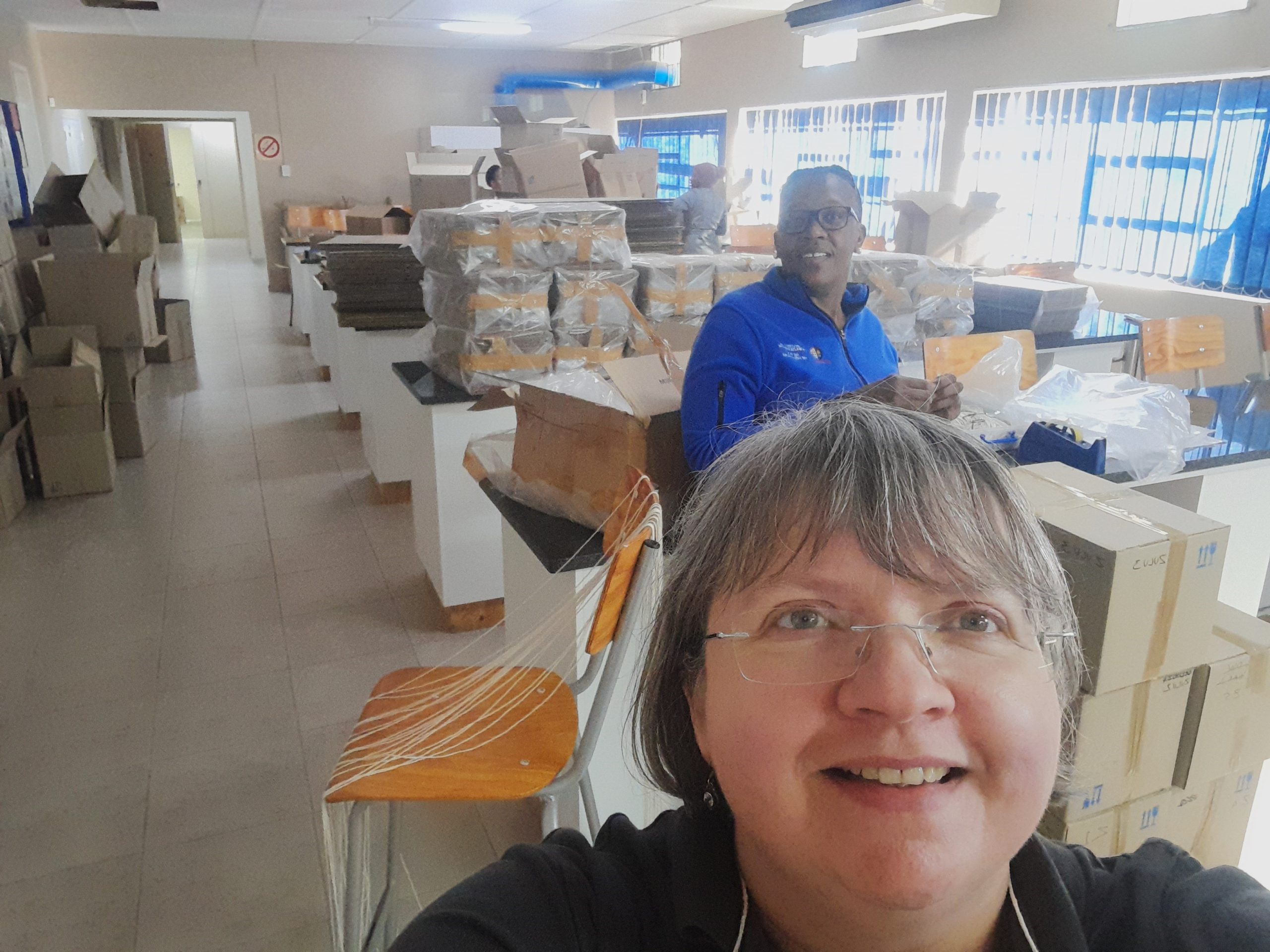
Bews Herbarium’s Dr. Christina Potgieter and Prudence Magwaza at UNIZULU
Teamwork Across Institutions
The relocation succeeded thanks to strong collaboration between the two institutions. UNIZULU academic staff were instrumental in facilitating agreements, while technical staff worked tirelessly during the packing phase. This cooperation will continue, as UNIZULU technicians are scheduled to visit the Bews Herbarium when delivering the remaining specimens.
Looking Ahead
Once fully incorporated, the UNIZULU collection will be far more accessible to both local and international researchers. UNIZULU will continue to send voucher specimens to Bews, ensuring ongoing collaboration. Notably, the collection includes many ethnobotanical vouchers, enhancing the Bews Herbarium’s already rich historical and research-based ethnobotanical collections.
This move also broadens the geographical scope of the Bews Herbarium, which previously focused mainly on the KZN Midlands and Drakensberg. Earlier acquisitions extended coverage across KZN and into Pondoland; now, the inclusion of the UNIZULU specimens adds vital representation of northern coastal KZN and Zululand. For researchers interested in KwaZulu-Natal botany and ethnobotany, the Bews Herbarium has become an even more invaluable resource.
Visit the Bews Herbarium!
We invite researchers, students, and nature enthusiasts to explore, study, and unlock new insights from this expanded resource. Visit the Bews Herbarium and take your research to the next level; your next great discovery could be waiting on their shelves!
Contact Dr. Christina Potgieter by email to learn more about the Bews Herbarium and their collections: PotgieterCJ@ukzn.ac.za
Acknowledgements: We thank Dr. Christina Potgieter, Prof. Benny Bytebier and Shanelle Ribeiro for providing the content for this article and providing input.
NSCF Communications Contact:
Fulufhelo Tambani
f.gelebe@sanbi.org.za