
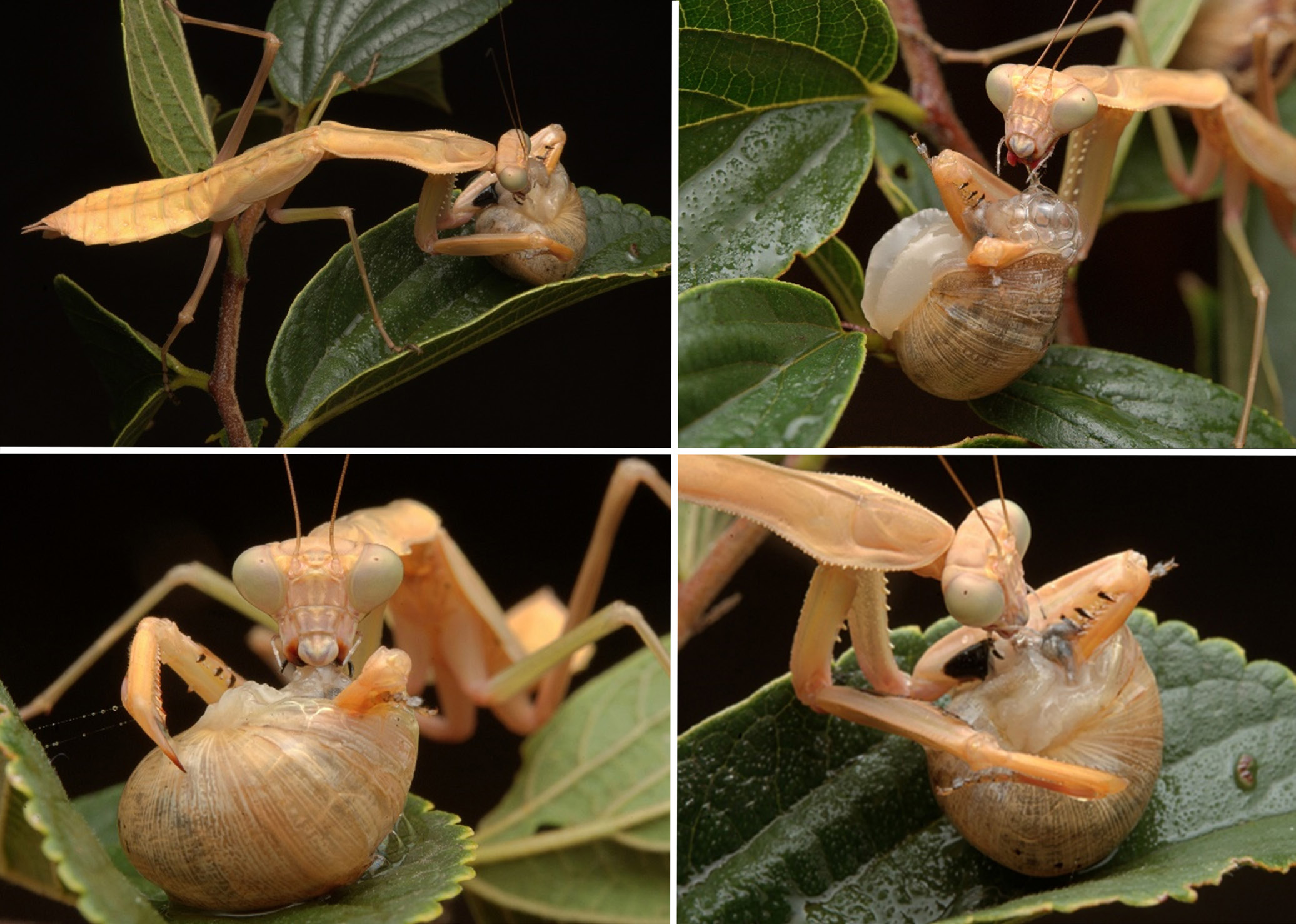
Figure 1. Flag Mantis (Polyspilota aeruginosa) immature feeding on a Brown Garden Snail (Cornu aspersum) in captivity. Photos by Paul Janse van Rensburg.
Article contributed by Riaan Stals, South African National Collection of Insects
The behaviour and biology of praying mantises are rather well known. Nonetheless, a group of South African authors, joined by a Belgian colleague, now published evidence of remarkable, unusual feeding behaviour among South African mantises. They recorded, for the first time ever, anywhere in the wild, that mantises can also feed on snails. Well, at least the Afrotropical genus Polyspilota can do that.
Three scientists at NSCF institutions coauthored the recent paper cited below. They are Terence Bellingan (Albany Museum), Riaan Stals (South African National Collection of Insects) and John Midgley (KwaZulu-Natal Museum). Whether in the field or by scrutinising iNaturalist, all three more or less simultaneously discovered this previously overlooked behaviour. Very soon they were joined by even more entomologists who had also, independently and at the same time, made this discovery in South Africa.
That praying mantises are predatory creatures is universally known among entomologists and laypeople alike. It would fly against common sensibilities to imagine that mantises can feed on snails. Not slugs, but snails. Those with the hard shells. A mantis is not a hard-shelled insect. But this has now been observed again and again, and also confirmed with a cage study.
One remarkable fact that unites all these observations is that species of the genus Polyspilota were the predator in every single recorded event.
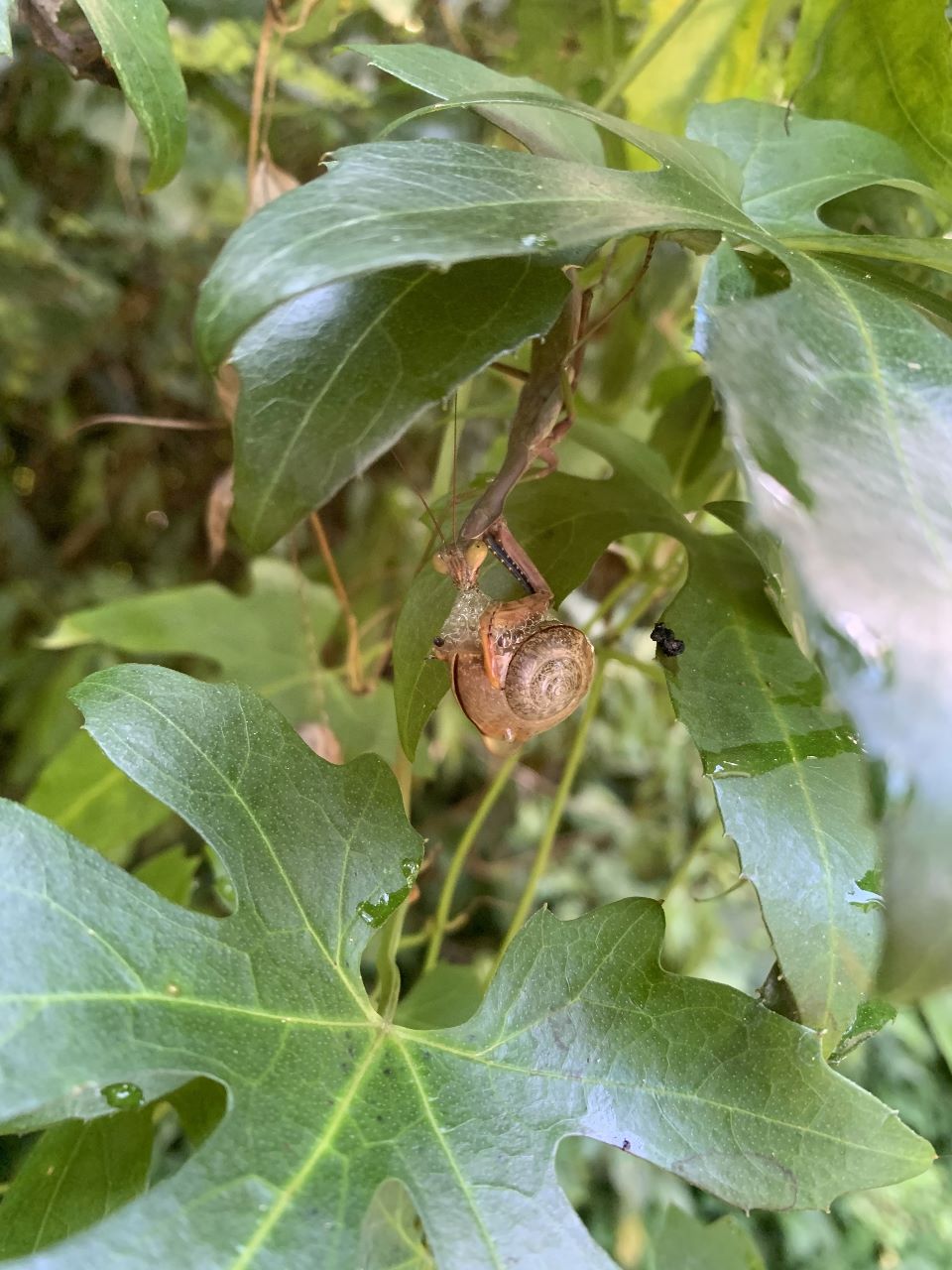
Figure 2. Flag Mantis (Polyspilota aeruginosa) nymph feeding on a Silky Tailwagger (Kerkophorus inunctus) in the wild at St Lucia, KwaZulu-Natal. Photo by Terence Bellingan.
Greyvenstein, B., Janse van Rensburg, P., Bellingan, T., Van den Berg, J., Jordaens, K., Stals, R. & Midgley, J. 2026. Snacking on snails: Novel prey and the distributions of Polyspilota praying mantids (Mantodea, Mantidae) in South Africa. Journal of Orthoptera Research 35(2): 251–258.
https://doi.org/10.3897/jor.35.187916
Open access.