
This Heritage Day, the Natural Science Collections Facility is celebrating the collections that hold the record of the living world South Africans share: an estimated 30 million specimens, one national story.
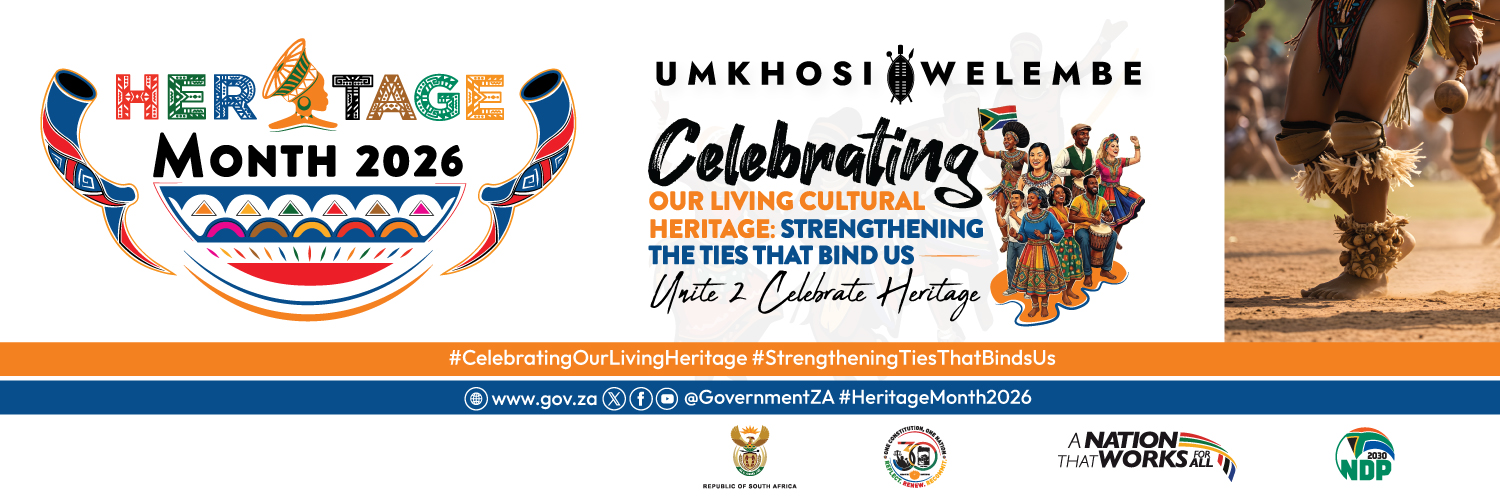
Heritage Day 2026 is celebrated under the theme Celebrating Our Living Heritage: Strengthening the Ties That Bind Us. It is a theme about heritage as something practised and passed on: language, music, ritual, indigenous knowledge, and the land itself. And it marks 31 years since Heritage Day was first celebrated in post-apartheid South Africa.
But there is a part of that living heritage that is easy to overlook: the natural world. The plants that heal, the animals that carry our stories, the species that shape the landscapes we call home. South Africa’s natural science collections are the record of that living heritage, and they are held, cared for and made accessible by the Natural Science Collections Facility (NSCF) and its 19 partner institutions.
The record of what lives here
Across South Africa’s museums, herbaria and universities, an estimated 30 million specimens are preserved: plants, animals, fossils and fungi, collected over two centuries. Each one carries a label: what it is, where it was found, whose hands collected it, and when.
Together, those labels form a national archive of biodiversity. They are the evidence of what lived here, what lives here now, and what could be lost. When a species is described, a specimen anchors its name. When a conservation decision is made, a collection provides the record. When a researcher asks how the country’s wildlife has changed, the answer is written in the drawers.
Heritage you can search
More than 1.5 million of those specimens have already been digitised and will soon be made searchable through the virtual museum. A schoolchild in Limpopo and a researcher in Berlin will soon be able to search the same record, from the same labels, in seconds.
Digitisation does not replace the specimen; the physical object remains the evidence. But it will make the heritage findable. Every digitised label is a piece of national research infrastructure, soon to be available to everyone.
The ties that bind
The theme’s ties are the connections between people and the land. The people who built these collections came from every walk of life, and the knowledge that guided their hands is part of the living heritage the collections document. Indigenous knowledge systems are recognised in South Africa’s national policy on living heritage; the collections are where that knowledge meets the scientific record, and where both are kept for the future.
Collections are not dusty relics. They are working infrastructure: they help track how species respond to a changing climate, protect crops from pests and disease, and support the science that informs how South Africa manages its natural wealth.
“When our first democratically-elected government decided to make Heritage Day one of our national days, we did so because we knew that our rich and varied cultural heritage has a profound power to help build our new nation.” Nelson Mandela, Heritage Day address, 1996
Thirty-one years on, that heritage includes the record of the natural world itself, and the people who keep it, digitise it and make it accessible.
This Heritage Day, celebrate the ties that bind, and meet the record of the living heritage they connect. Watch for the virtual museum, visit a partner institution near you, and follow NSCF.