
This Women’s Month, the Natural Science Collections Facility is asking South Africa to meet the women behind the country’s collections — and to add the next names to the record.
Every specimen in South Africa’s natural science collections carries a label. The label records what it is, where it was found, and — most importantly — whose hands put it there. This August, the Natural Science Collections Facility (NSCF) is putting the women behind those labels back in the picture.
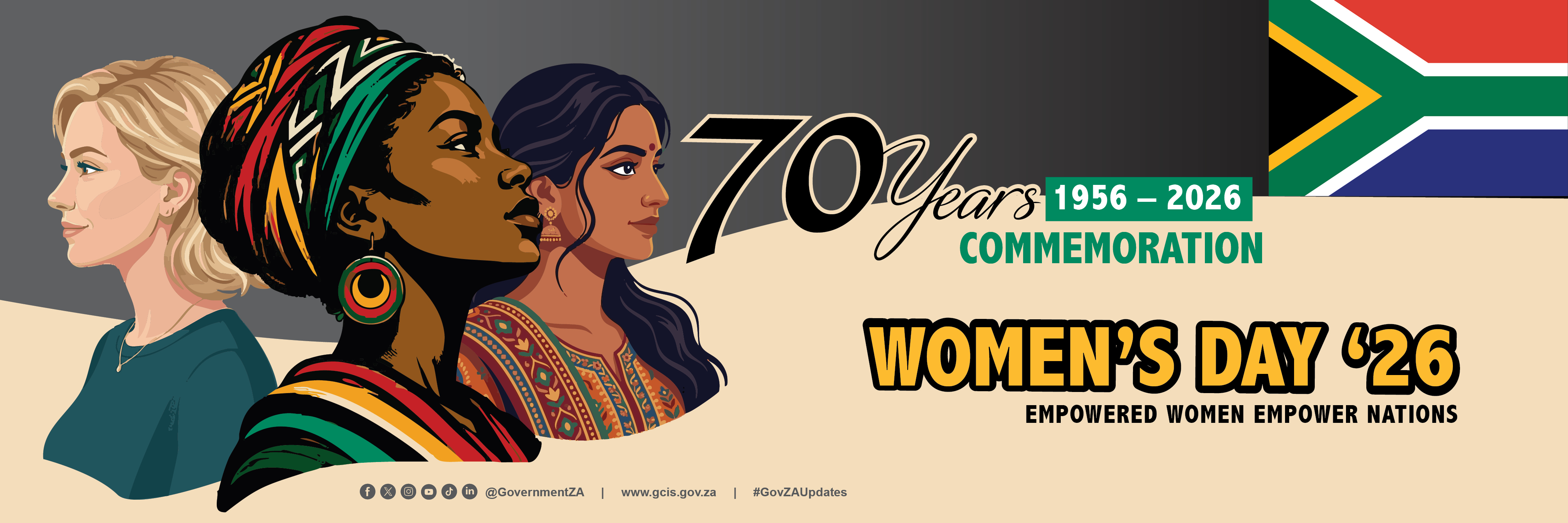
The timing matters. 2026 marks 70 years since some 20,000 women marched to the Union Buildings on 9 August 1956 to protest the pass laws — the march that Women’s Day commemorates. This year’s national theme is Empowered Women Empower The Nation, and for the collections community, the women are not hard to find. They are written all over the record.
The names already on the labels
Elsie Esterhuysen amassed more than 36,000 specimens across her career at the Bolus Herbarium at the University of Cape Town — a collecting record no one has matched, and the reason she is remembered as one of the most outstanding collectors of South African flora in history.
Amelia Obermeyer spent her career at the National Herbarium in Pretoria, part of the generation of botanists who built the plant records that still anchor South African botany.
Mary Pocock, an algae specialist who died in 1977, founded the herbarium at Rhodes University in 1942 — a collection that still carries her institutional signature today.
And in East London in December 1938, a 31-year-old museum curator named Marjorie Courtenay-Latimer rescued a strange fish from a trawler’s catch. It turned out to be a coelacanth — a fish thought to have vanished some 65 million years ago. Her name now sits on one of the most famous specimen labels in the world. (Watch for her full story on Women’s Day, 9 August.)
The record is research infrastructure
These names matter beyond history. South Africa’s collections hold an estimated 30 million specimens across a network coordinated by NSCF’s 19 partner institutions — and more than 1.5 million have already been digitised, with the count growing. That record is national research infrastructure: it powers taxonomy, conservation decisions, policy, and public understanding. Every digitised label is a piece of that infrastructure made findable.
This month’s ask: read a label, name a woman, post her specimen
NSCF’s Women’s Month campaign, Her Name on the Label, is built on one ask:
Read a label. Name a woman. Post her specimen.
Here is how it works:
- Find the label. Visit your local museum, herbarium, or university collection — or browse an online collection portal — and find a specimen collected by a woman.
- Name her. Photograph the label and tell her story: who she was, where she collected, what she gave to the record.
- Post her specimen. Share it with #HerNameOnTheLabel and #WomenInTheCollection.
Why it matters
Labels are easy to skip. But a label is a handshake between a collector and everyone who comes after — a researcher in 2050, a schoolchild on a field trip, a policymaker deciding what to protect. This month, NSCF is making sure the women in that handshake are seen.
The next label is being written right now — by a curator, a digitisation specialist, a student. It could carry your name, or the name of a woman you nominate.
Join the campaign: follow NSCF on X, LinkedIn, Instagram and Facebook with #HerNameOnTheLabel, and post the first label you find.