
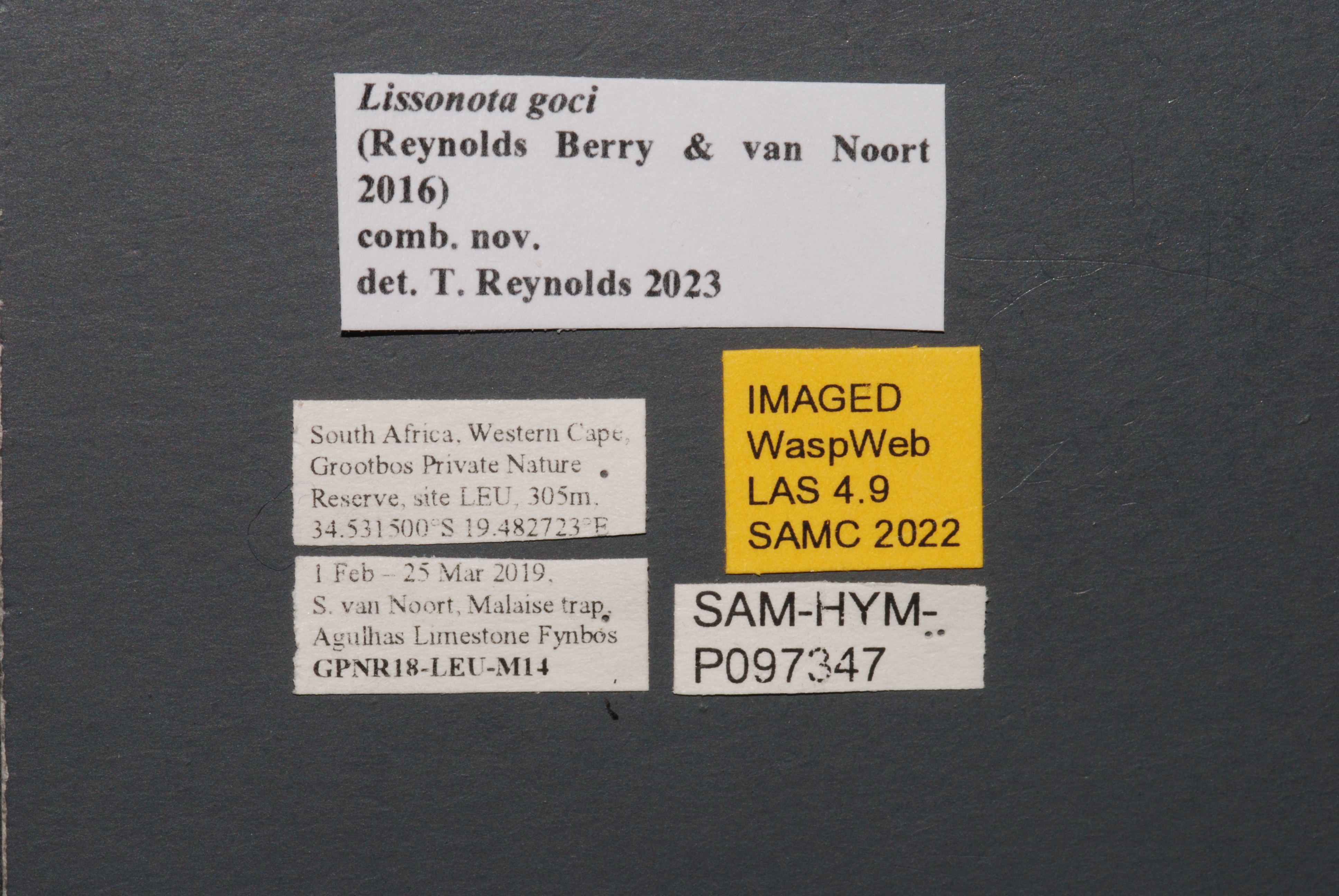
Every museum label tells a story. Most visitors read the species name, the collector, the date. They rarely see the names of the people who made the science possible; the hands that sorted, the eyes that separated, the patience that turned chaotic field samples into orderly knowledge.
Nosiphiwo Goci was one of those people.
The Work Behind the Discovery
For over 17 years, Nosiphiwo worked as a research assistant in the Natural History Department of the Iziko South African Museum in Cape Town. Her job was not glamorous. It was meticulous, repetitive, and absolutely essential.
She processed bulk insect samples, sometimes thousands of specimens from a single collecting event, and separated them into distinct taxonomic groups and families. This work is the unglamorous backbone of taxonomy. Without it, researchers cannot efficiently track biodiversity, work on their specialist groups, or discover new species. Nosiphiwo also contributed to the digitisation of the museum’s entomology collection, helping to secure baseline biodiversity data for future scientific and ecological research.
The specimens she handled will be studied by scientists for decades to come. Climate researchers will use them to track shifting distributions. Biosecurity specialists will reference them to identify invasive threats. Taxonomists will examine them to name species not yet known to science.
A Wasp Carries Her Name
Ten years ago, following her passing, a newly described parasitoid wasp species; Lissonota goci, was named in her memory. In taxonomy, having a species named after you is one of the most enduring forms of recognition. The name is permanent. It is written into the scientific record, peer-reviewed and published, and it will persist as long as that species is studied.
Lissonota goci is a parasitoid wasp, among the most diverse, ecologically important and poorly known insect groups, regulating herbivorous insect populations and playing a central role in biological control for over a century (Luan et al. 2019, Journal of Integrative Agriculture; Godfray 1994, Parasitoids: Behavioral and Evolutionary Ecology). It is fitting that Nosiphiwo, who spent her career sorting and classifying them, is now honoured through one of nature’s poorly known.
Why It Matters
The NSCF coordinates over 18 million preserved plant, animal, and fossil specimens across 19 partner institutions. The people who process, curate, and digitise these collections are rarely the ones whose names appear in journal bylines. But without their work, the science does not happen.
Nosiphiwo Goci’s story is a reminder that natural history collections are not just stacks of pinned insects and pressed plants. They are the accumulated labour of dedicated individuals whose contributions deserve to be seen, spoken, and written.
Her name is on the label. It should be in the story too.