
The Natural Science Collections Facility is a network of South African institutions holding natural science collections, established as part of the Department of Science, Technology and Innovation’s Research Infrastructure Roadmap and co-ordinated by the South African National Biodiversity Institute (SANBI). Participating institutions are committed to collaborating to achieve the following objectives:
Collections secured and accessible physically and virtually for research
Data from specimens in collections accessible and used for managing collections, research and decision-making
Research on collections and associated data addresses issues of national and global relevance
Collections and associated research provide services to identify natural science specimens for a range of stakeholders including in the agriculture, health, environmental management and academic sectors
Latest News
Her name on the label, today: the women building South Africa’s collections
The names on today's labels are being written by a new generation of women; in digitisation suites, herbarium labs, and the field.When we talk about the women behind South Africa's natural science collections, it is tempting to look only at the past. But the record is...
Her Name on the Label: Nosiphiwo Goci
Every museum label tells a story. Most visitors read the species name, the collector, the date. They rarely see the names of the people who made the science possible; the hands that sorted, the eyes that separated, the patience that turned chaotic field samples into...
A fish from 65 million years ago, found by a woman in East London
On 21 December 1938, a 31-year-old museum curator saved a fish no one could name. It turned out to be a coelacanth; a fish thought to have vanished some 65 million years ago. Marjorie Courtenay-Latimer was born in East London on 24 February 1907, and in 1936 she...
New species described from South African collections
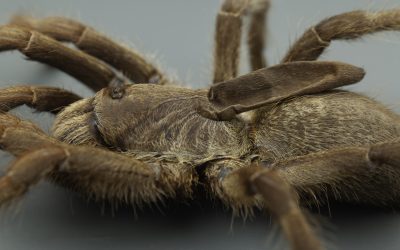
New species of Tarantula
A new species of tarantula (the Mega Horned Baboon Tarantula, Ceratogyrus attonitifer) is described in a paper published in the open-access journal African Invertebrates by Drs John Midgley and Ian Engelbrecht.
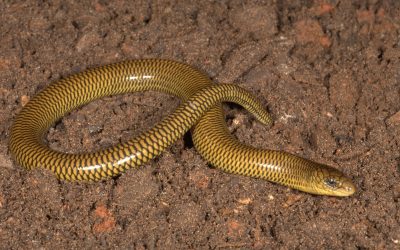
Two new legless lizard species found
Two new legless lizard species from the genus Acontias from the Mpumalanga Escarpment were recently described by Werner Conradie and colleagues. These species live under rocks in mountain grasslands and feed on termites. Type material is deposited at Port Elizabeth...
A new species of tangle-veined fly described.
A new species of tangle-veined fly was described in the journal Zootaxa from the Hantam National Botanical Garden, Nieuwoudtville, Bokkeveld Plateau, Northern Cape Province, South Africa. The species is a narrow-range endemic and is restricted to the Nieuwoudtville...
Iconic specimens
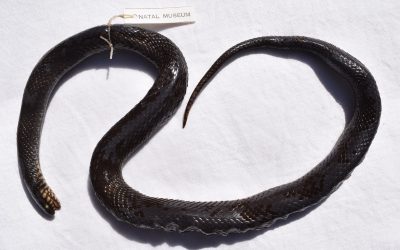
Once lost but now found: a rare snake and endemic to South Africa | Montaspis gilvomuculata
Montaspis gilvomuculata. Photo by Matabaro Ziganira, KwaZulu-Natal Museum This rare cream-spotted snake is endemic to the Drakensberg Mountains in the province of KwaZulu-Natal. Only four specimens have ever been found in this region between 1967 and 1991. Between...
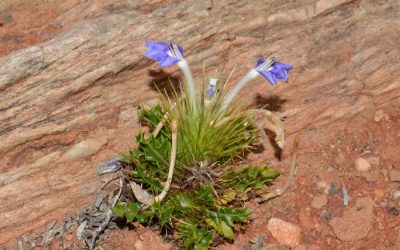
Interesting specimen — Acanthopsis tuba
The Holotype of Acanthopsis tuba was collected by H.W.R. Marloth (1855–1931) in August 1925 at Anenous. Anenous (originally known as P/ani P/nous in Nama) was named after a spring in the corner of the kloof and is located 14 km west of Steinkopf. Marloth, a...
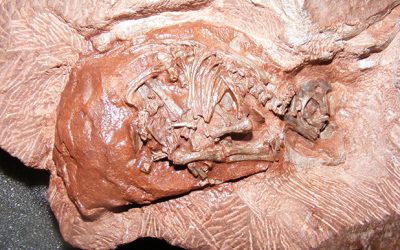
Eggs and embryos of the dinosaur Massospondylus
Eggs with embryos belonging to the southern African dinosaur Massospondylus were discovered in 1978.
Use of Collections

Shale Gas Exploration SEA

Barcode of Wildlife Project

Red List Assessments
Virtual Museum
The NSCF aims to increase the accessibility and use of natural science collections for research and also to secure collections.
One mechanism of achieving both these objectives is to establish a “virtual museum” which will take the form of detailed images of important specimens such as types, and to also provide digital access to documents such as historical field notes, old catalogue books and accession registers and other documents related to the collections. Over the next two years we will initiate a project to digitise specimens and important documents and to make these available online. We also aim to show some of the collection store rooms online to provide a sense of the scope and scale of these for the public who rarely have the chance to see these hidden treasures.


